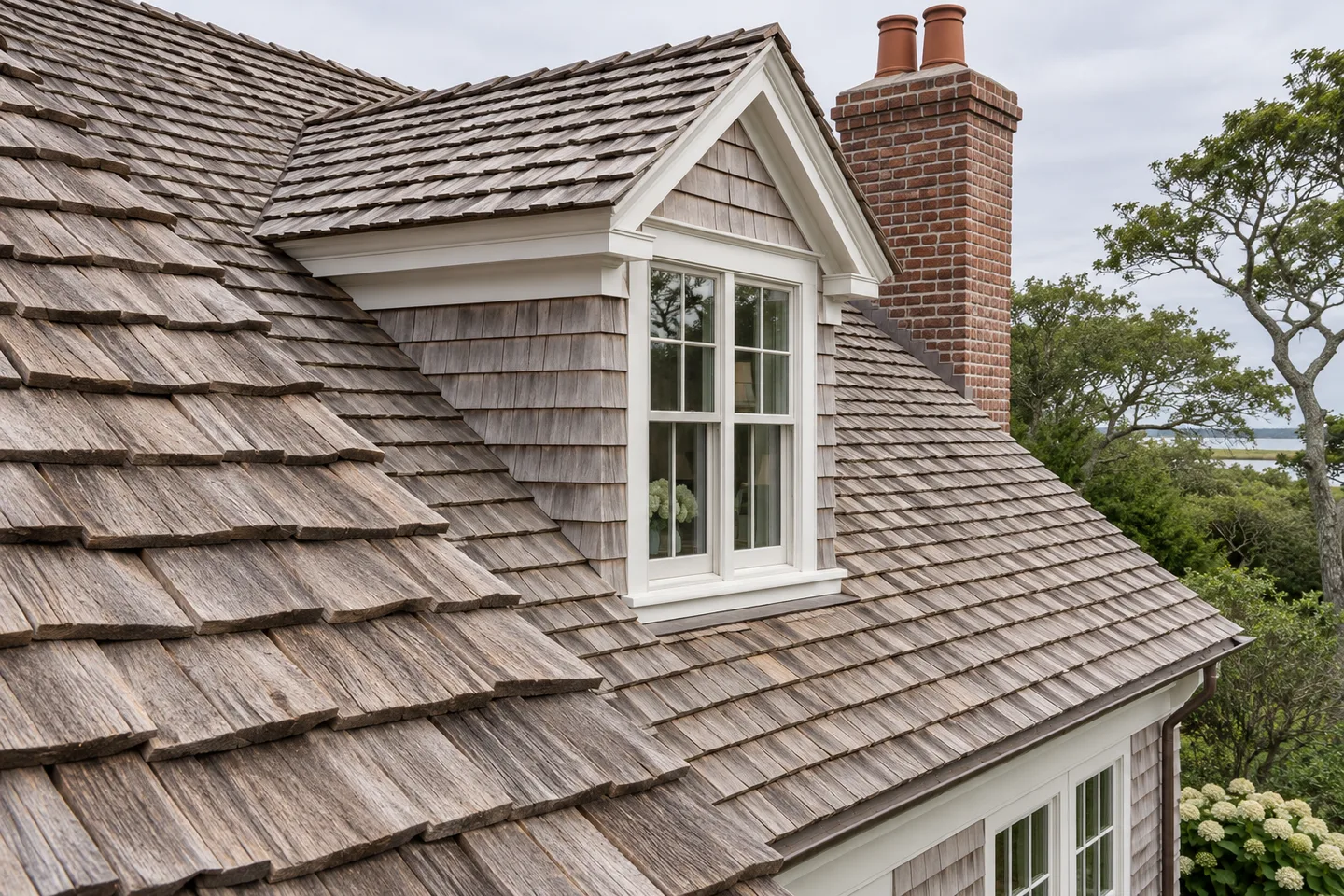
Shingles or shakes: two distinct textures
Cedar shingles have a more uniform, sawn profile that creates orderly roof lines. Cedar shakes typically have a thicker, more textured appearance. Both need a roof assembly and installation method appropriate to the selected product. We discuss exposure, detailing and the character of the house when comparing the two.
Detailing for a coastal setting
Cedar can perform well in coastal conditions when the product, installation and ongoing care suit the location. Wind exposure, shade, salt air and drying conditions all matter. Underlayment, ventilation, fasteners and chimney flashing need to work with the roof covering rather than be treated as afterthoughts.
Cedar roof replacement & selective repairs
A few split or missing pieces may call for a focused repair; broad deterioration requires a wider assessment. With cedar roof replacement, we review the supporting assembly and preserve the proportions of the roof edges and architectural details. Cedar roof repair should account for the condition of neighboring shingles or shakes.
Help cedar dry and drain
Debris that holds moisture against the roof can interfere with drying. A maintenance plan may include inspection of shaded areas, valleys, flashing and gutter drainage. Avoid aggressive cleaning methods that can damage wood. Cedar siding can be coordinated with the roof while allowing each surface to weather naturally.