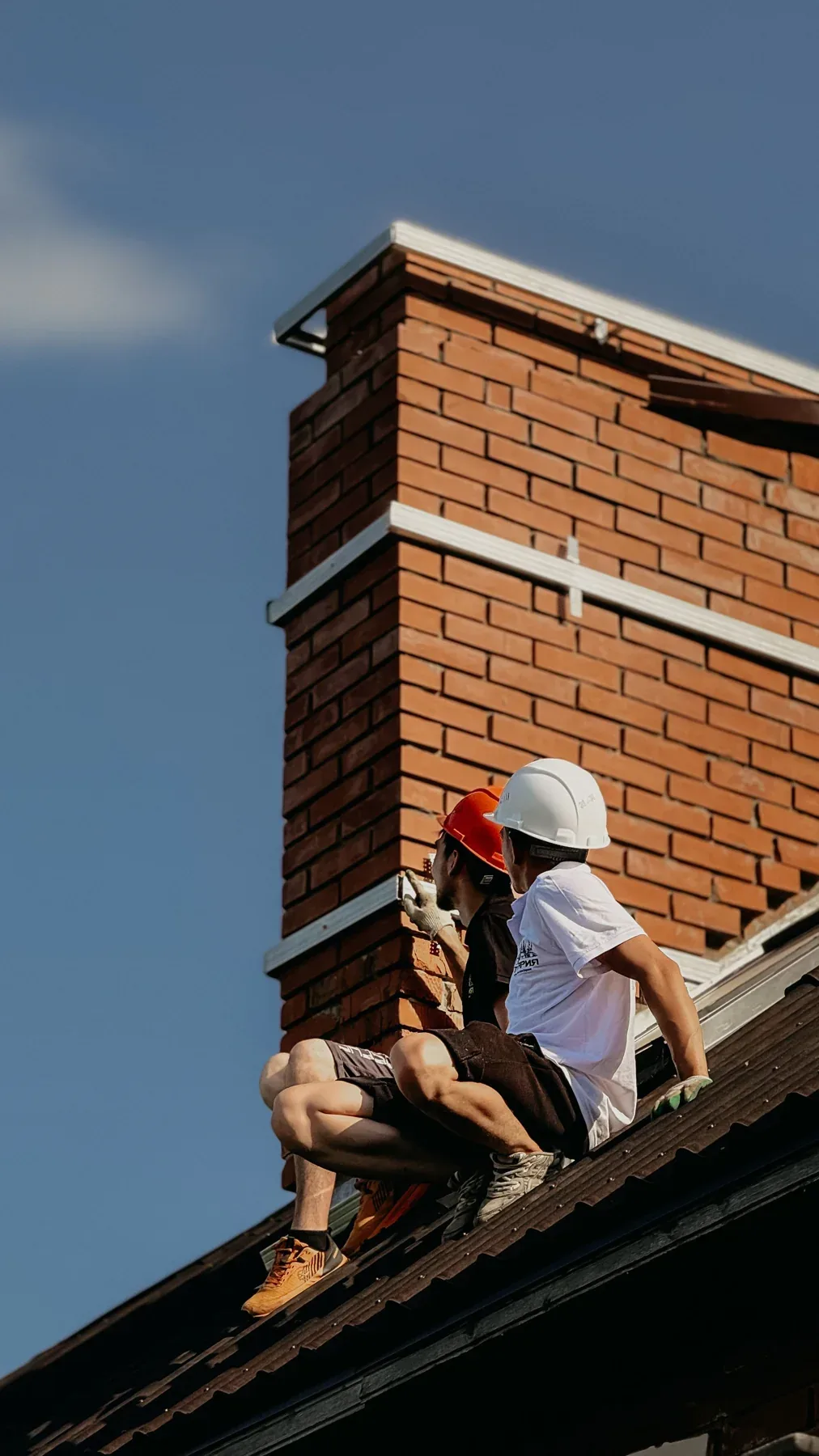
Chimney flashing
Base flashing and counterflashing work together to shed water where the roof meets masonry. Details differ with the roof material, chimney position and surrounding slope. Roof leak detection can help distinguish a flashing issue from other routes for moisture.
Chimney repairs
Cracked joints or deteriorated exposed masonry can allow water into the chimney structure. Repair planning starts with the visible condition and the relationship to the roof. Structural concerns or internal flue issues may require a specialist evaluation beyond exterior roofing work.
Chimney cap installation
A properly fitted chimney cap helps limit rain and debris entering the flue opening while maintaining the required venting. The correct cap depends on the chimney configuration and condition. Cap work should be coordinated with any other repairs at the top of the chimney.
Coordinate chimney work with roofing
During roof replacement, existing chimney flashing deserves review rather than automatic reuse. On cedar roofs and standing seam roofs, the transition should suit the specific covering and allow materials to behave as intended.