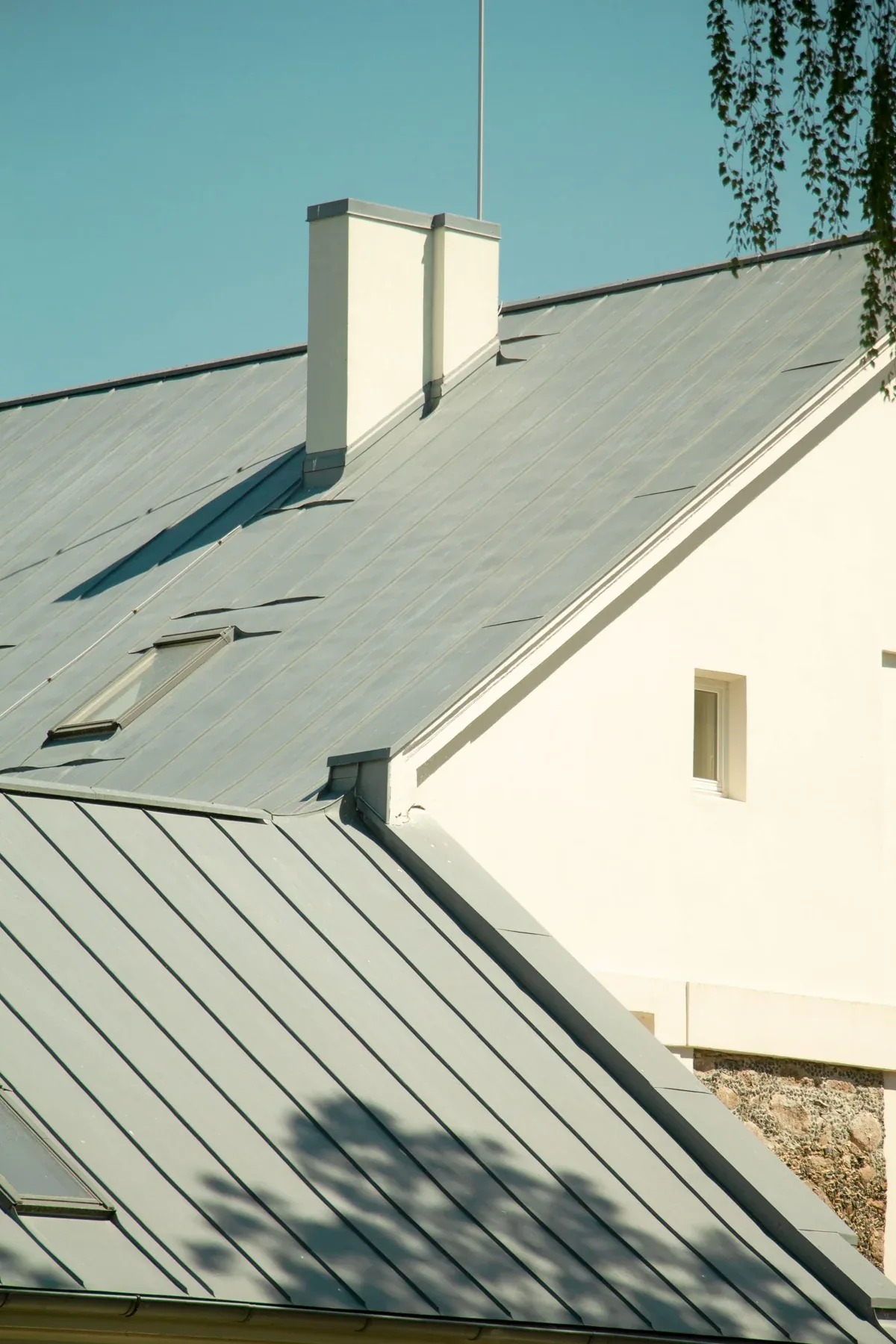
Standing seam, carefully integrated
Raised seams connect the roof panels while concealing many of the fastening details. Panel layout, roof slope, expansion and transitions all influence the finished system. We consider how ridges, valleys and wall junctions will read from the ground as well as how they manage water.
Material selection near salt air
Coastal exposure makes the choice of metal, finish and compatible fasteners particularly important. The appropriate specification depends on the site and the product. Avoid mixing materials that can cause corrosion at contact points, and review product-specific limitations before selecting a finish.
A complete roof or a complementary accent
Metal may suit a full roof replacement or a smaller roof section adjoining cedar shingles. Those junctions need deliberate flashing details. Gutter and downspout installation should account for water leaving the metal roof and the building below it.
Inspect seams, penetrations & edges
A metal roof still benefits from periodic inspection. Fasteners, seals, coatings and penetrations can need attention over time. For a leak or loose detail, metal roof repair begins with identifying the system and the cause rather than applying an incompatible patch.